
Propitiation is part of the threefold work of Christ upon the Cross. See also:
 Brandon Cannon
 Brandon Cannon
I'll admit it. "Propitiation" is a word that makes people's eyes glaze over. It's long, it's Latin-ish, and most modern Bible translations quietly swap it out for something smoother.
But I think it's one of the most important words in the New Testament, and I think it's worth fighting for. Because if we lose it, we lose something essential about who God is and what Jesus did.
What the Word Means
Propitiation means turning away wrath by offering a sacrifice that satisfies justice. The Greek word group (hilaskomai, hilasterion, hilasmos) shows up in a handful of key places:
- God put Christ forward "as a propitiation by his blood, to be received by faith" (Romans 3:25).
- Jesus became a merciful high priest "to make propitiation for the sins of the people" (Hebrews 2:17).
- "He is the propitiation for our sins, and not for ours only but also for the sins of the whole world" (1 John 2:2).
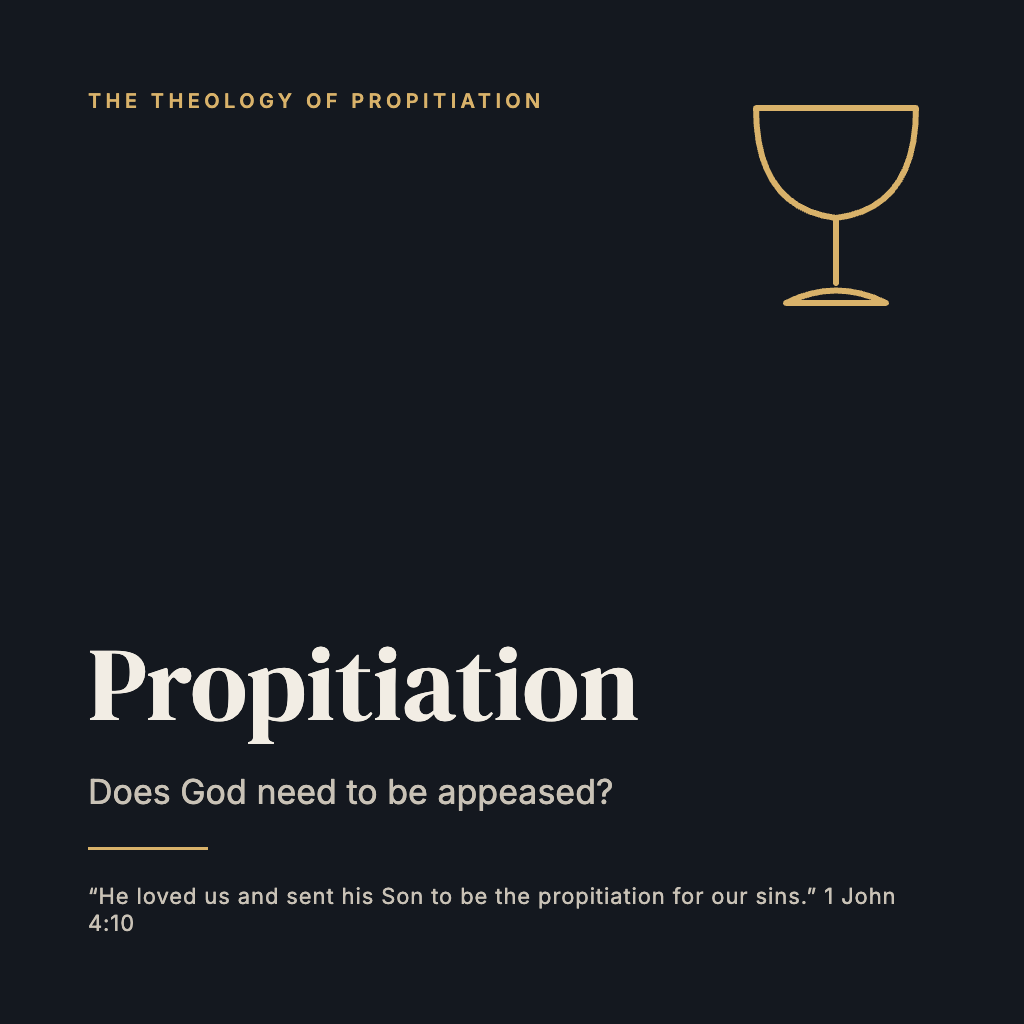
- "In this is love, not that we have loved God but that he loved us and sent his Son to be the propitiation for our sins" (1 John 4:10).
In the Greek Old Testament, hilasterion is the word for the mercy seat, the lid of the Ark of the Covenant where the high priest sprinkled blood once a year on the Day of Atonement (Leviticus 16). That's the place where God's holiness and Israel's sin met, and where blood stood between them.
Paul is saying Jesus is that place now.
The Objection: "That Sounds Pagan"
Here's the big pushback. In ancient pagan religion, people offered sacrifices to calm down moody, unpredictable gods. You'd burn something, bribe the deity, and hope he stopped throwing lightning at your village.
So critics say: if Christians teach that Jesus "propitiated" God, aren't we just describing a bigger version of that? An angry God who needed blood before He'd calm down?
This objection got serious scholarly backing in the 1930s when C.H. Dodd argued that the word should be translated "expiation" instead. Expiation means removing or covering sin. Propitiation means satisfying wrath. Dodd thought the idea of God's wrath needing satisfaction was beneath the God of the Bible.
Leon Morris answered him in The Apostolic Preaching of the Cross (1955), and Roger Nicole and others made similar cases. Their argument, in short, was that the word group consistently carries the idea of turning away anger, and that the context of Romans 1 to 3 is drenched in God's wrath against sin. You can't read "the wrath of God is revealed from heaven against all ungodliness" (Romans 1:18) and then act like wrath isn't the problem Romans 3:25 is solving.
But here's the thing. The pagan picture and the biblical picture aren't just different. They're upside down.
Three Ways the Bible Flips the Script
First, God's wrath is not moodiness. Pagan gods got angry because they were insulted, bored, or jealous. God's wrath is His settled, holy opposition to evil. It isn't a temper tantrum; it's justice. Honestly, would you want a God who wasn't angry at child trafficking, racism, or abuse? A God without wrath against evil isn't loving. He's indifferent.
Second, we don't provide the sacrifice. God does. In paganism, humans try to buy off the gods. In the gospel, God provides the sacrifice Himself. Look again at 1 John 4:10: God "loved us and sent his Son to be the propitiation." Love comes first. Propitiation is the result of God's love, not the cause of it. God doesn't love us because Jesus calmed Him down. Jesus came because God already loved us.
Third, the one who satisfies wrath is God Himself. The Son isn't a third party bribing an angry Father. He is God in the flesh, freely giving Himself (John 10:18). Think about Gethsemane, where Jesus prayed that the cup might pass from Him (Matthew 26:39). In the Old Testament, that cup is the cup of God's wrath (Isaiah 51:17; Jeremiah 25:15). Jesus drank it down so we would never have to taste it.
Why "Expiation" Isn't Enough
Expiation is true as far as it goes. Jesus does remove our sin. But if that's all we say, we leave out the reason sin needed removing. Sin isn't just a stain. It's an offense against a Person. And a holy Person rightly opposes it.
Without propitiation, the cross becomes a cleanup job. With it, the cross becomes the place where God's justice and God's love both get their full say. Neither one gets sidelined.
What This Means for Us
If Jesus is your propitiation, then there is no wrath left for you. None. Not a little leftover, not a probation period. "Since, therefore, we have now been justified by his blood, much more shall we be saved by him from the wrath of God" (Romans 5:9).
That's not a doctrine that makes God look cruel. It's the doctrine that shows you how far His love was willing to go.