
Welcome to the final part of our series, "Merficul One."
Here is today's text:
(Jonah 4:1-11) This change of plans greatly upset Jonah, and he became very angry.
2 So he complained to the Lord about it: “Didn’t I say before I left home that you would do this, Lord? That is why I ran away to Tarshish! I knew that you are a merciful and compassionate God, slow to get angry and filled with unfailing love. You are eager to turn back from destroying people.
3 Just kill me now, Lord! I’d rather be dead than alive if what I predicted will not happen.”
4 The Lord replied, “Is it right for you to be angry about this?”
5 Then Jonah went out to the east side of the city and made a shelter to sit under as he waited to see what would happen to the city.
6 And the Lord God arranged for a leafy plant to grow there, and soon it spread its broad leaves over Jonah’s head, shading him from the sun. This eased his discomfort, and Jonah was very grateful for the plant.
7 But God also arranged for a worm! The next morning at dawn the worm ate through the stem of the plant so that it withered away.
8 And as the sun grew hot, God arranged for a scorching east wind to blow on Jonah. The sun beat down on his head until he grew faint and wished to die. “Death is certainly better than living like this!” he exclaimed.
9 Then God said to Jonah, “Is it right for you to be angry because the plant died?” “Yes,” Jonah retorted, “even angry enough to die!”
10 Then the Lord said, “You feel sorry about the plant, though you did nothing to put it there. It came quickly and died quickly.
11 But Nineveh has more than 120,000 people living in spiritual darkness, not to mention all the animals. Shouldn’t I feel sorry for such a great city?”
Jonah 01: The Beauty of Salvation
The opening moments set a clear promise: we’re breaking down Jonah one chapter at a time, not as a children’s tale about a whale, but as a portrait of God’s mercy at war with human bias. Jonah 1 is rich with context that matters for modern listeners—
 Brandon Cannon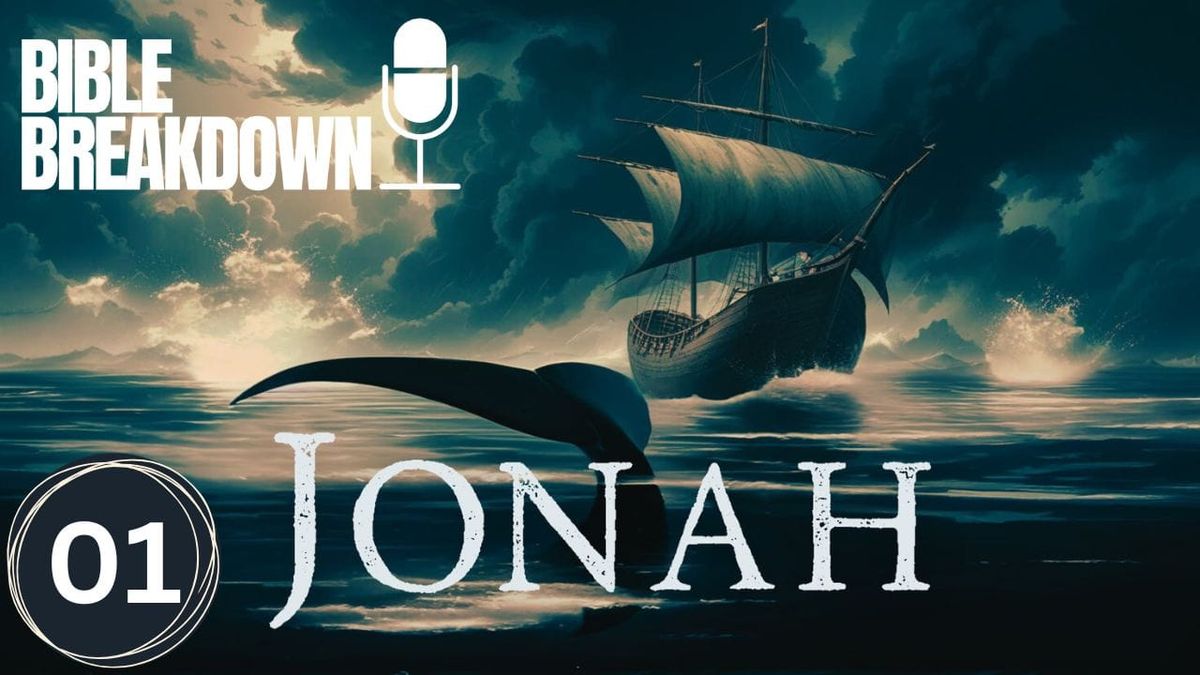
Jonah 02 - Brandon’s Public Commentary
Jonah 02 - Brandon’s Public Commentary
Overall Commentary: 🌎
View Week One's Blog to Get all the Overall Details:
Merciful One: Jonah 1 (Whale of A Tale)
Welcome to the first part of our series, “Merficul One.”
Here is today’s text: (Jonah 1:1-17) The Lord gave this message to Jonah son of Amittai: 2 “Get up and go to the great city of Nineveh. Announce my judgment against it because I have seen how wicked its
Brandon Cannon
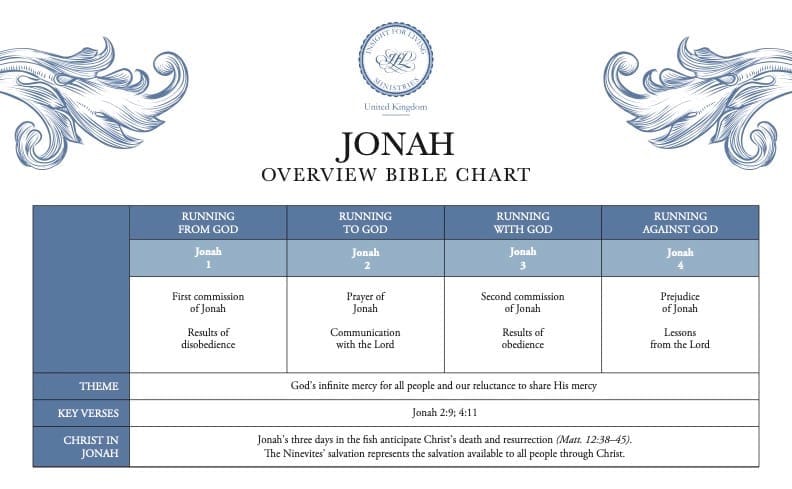
🔑 Key Themes
- God’s Mercy is for Everyone
Not just Israel—God cares about even Israel’s enemies. - You Can Run, But You Can’t Escape God
God pursues Jonah even in rebellion. - Repentance Matters
Nineveh responds quickly, while Jonah resists. - God’s Compassion vs. Human Hardness
Jonah struggles with the very mercy God freely gives.
Today's Commentary.
Verse 1-5: The Unhappy Prophet.
Verse 1.
- "Great upset Jonah"- Some Jewish commentaries see this as Jonah finding God's will to be deeply troubling to the point of a form of evil. This is debated, but he is definitely not in favor of God's decision. This is likely because his contemporaries (Amos and Hosea) have recently decreed that God will use the Assyrians to bring judgment on Israel. Jonah is possibly seeing God's mercy destroying Israel's hope.
Verse 2.
- This is the big reveal of the book of Jonah. Up to now, the reader does not know Jonah's heart. Now they see why Jonah was so unwilling to go to Nineveh. The whole time, he did not share God's mercy for the people of the city.
- Jonah uses God's own words as an indictment against Him. By calling God merciful and filled with unfailing love, Jonah is quoting back to God how He has described Himself, and now He would relate to His people.
Verse 3.
- Some commentators see this as an embarrassment. Jonah has predicted destruction. If it does not happen because of their repentance, it will make Jonah look like a false prophet.
Verse 4.
- The most direct Hebrew translation for God's question is, "Is it right for you to be so deeply angry about this?" God was not questioning his emotions but their depth. Jonah appears to have been blind with rage.
Verse 5.
- It is possible Jonah left the city because the 40 days were not yet up. He was hoping God might destroy the city anyway.
Verse 6-8: God's Object Less.
Verse 6.
- "The LORD arranged." This is the same word used in Jonah 1 regarding the fish. God arranged the plant, worm, and wind as a vehicle to transform Jonah.
- Plant- Likely a castor oil plant or something called a climbing gourd.
- Jonah experiences joy and is grateful for the plant. The Lord will use this to remind Jonah of what it is like to enjoy something outside of himself and his desires.
Verse 7.
- Worm- God causes a worm to destroy the plant by chewing through the stem. The worm and the heat would have quickly destroyed the plant.
Verse 8.
- The wind coming out of Arabia would have been hot and strong. This would have quickly caused Jonah to be threatened with heat stroke.
Verse 9-11. God Reveals The Lesson.
Verse 9.
- God asks Jonah the same question as in verse 4. This time, God gets an answer. Jonah feels compassion for something outside of himself.
Verse 10.
- God shows Jonah that the pity he had for the plant is a small piece of what God feels for the nation of Nineveh. Sin had almost destroyed it, but God was going to show mercy.
Verse 11.
- 120,000- This would be in the greater Nineveh area.
- Spiritual darkness- some translations say they do not know their left hand from their right hand. This would indicate they do not know how to live righteously. They are like newborn children.
- The story ends on a cliffhanger. We do not know what Jonah did in response to this rebuke from the Lord.
Epilogue.
We do not know for certain what Jonah did after Jonah 4 comes to a close. The story is left open-ended so we can decide what we would have done. Below are a few reasons why I think he went back into the city:
- If Jonah wrote this book, he would not have written it in this way if he had gone back home and not obeyed the Lord. The story ends with a great lesson about God's merciful compassion. He could not have written it if he had not understood the lesson.
- There is a tomb dedicated to Jonah in Mosul. It is a place just outside the ancient city limits of Nineveh.
- Assyrian Christians trace their lineage of worshipping Yahweh back to the people that Jonah preached to.
God's Promise:
(Ephesians 2:4-5) God is so RICH IN MERCY, and he loved us so much, that even though we were dead because of our sins, he gave us life when he raised Christ from the dead.
Resources
To find further sources I am using to study this book, look at the bottom of the overview page in my public commentary.
Jonah 4 - Dr. Constable’s Expository Notes - Bible Commentaries - StudyLight.org
Jonah 4, Dr. Constable’s Expository Notes, Dr. Constable’s Expository Notes provide Christians with deep insights into the Scriptures through thorough analysis and contextual understanding.

Jonah Chapter 4 - Enduring Word
David Guzik commentary on Jonah 4, where Jonah expresses his complaint about the repentance of Nineveh, and gets confronted by God about it.
David Guzik
Commentary on Jonah 4 by Matthew Henry
Matthew Henry :: Commentary on Jonah 4
Matthew Henry
Jonah 4 – The Lesson of the Plant | Christian Library
Hendrick J. Room
Jonah 4 Commentary
Jonah 4 commentary. God directs everything except the heart of His prophet. Why does it end with a question? Well, that’s the whole point.
Karl McGinnis